Iconic New York Foods: 12 Classics and Where They Began
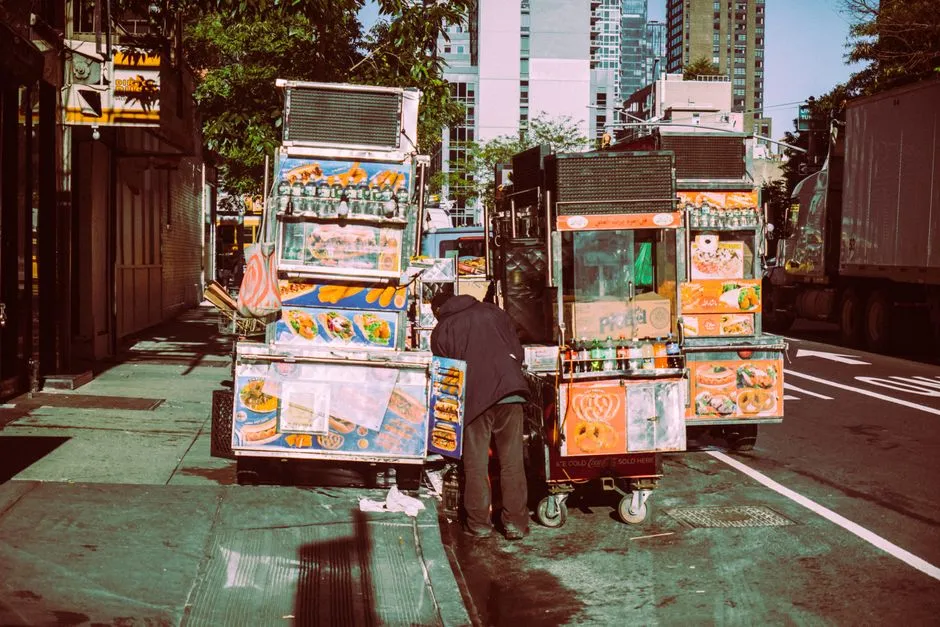
What Are the Iconic New York Foods?
The iconic New York foods are the dishes the city invented, perfected, or made famous: the foldable New York slice, the boiled-then-baked bagel with lox and cream cheese, pastrami on rye, dense New York cheesecake, the street cart hot dog, the soft pretzel, the black and white cookie, the egg cream, the knish, the chopped cheese, halal cart chicken over rice, and the bodega bacon, egg, and cheese. Most were born in immigrant kitchens — Italian, Jewish, German, Greek, Egyptian — and then shaped by the city itself: eaten standing up, ordered fast, and priced for working people.
That last part matters. New York's food canon isn't a list of luxury dishes. It's a record of who arrived, where they settled, and what they could cook cheaply enough to sell on a sidewalk. Learn the twelve below and you'll understand the city's palate — and know exactly what to order when you get here.
The 12 Classics at a Glance
| # | Dish | Rooted In | Where It Took Hold |
|---|---|---|---|
| 1 | New York slice | Italian immigrant bakeries | Little Italy, then everywhere |
| 2 | Bagel with lox | Eastern European Jewish bakers | Lower East Side |
| 3 | Pastrami on rye | Jewish delicatessens | Lower East Side |
| 4 | New York cheesecake | Jewish delis and restaurants | Brooklyn and Manhattan |
| 5 | Street cart hot dog | German immigrants | Coney Island and street corners |
| 6 | Soft pretzel | German bakers and vendors | Street carts citywide |
| 7 | Black and white cookie | Neighborhood bakeries | Citywide |
| 8 | Egg cream | Candy stores and soda fountains | Brooklyn and the Lower East Side |
| 9 | Knish | Eastern European Jewish vendors | Lower East Side, Brighton Beach |
| 10 | Chopped cheese | Bodega grills | Harlem and the Bronx |
| 11 | Halal cart chicken over rice | Egyptian and Middle Eastern cart vendors | Midtown, then citywide |
| 12 | Bacon, egg, and cheese | Bodega and deli counters | Every borough |
The Classics, One by One
1. The New York Slice
A New York slice is thin, wide, and crisp enough to hold its shape but pliable enough to fold in half — which is exactly how locals eat it, one-handed, often while walking. The style traces back to the Italian immigrant bakeries of Lower Manhattan in the early 1900s, where whole pies baked in coal-fired ovens were eventually sold by the slice to workers who couldn't afford a whole one.
The formula sounds simple — a lean, slow-fermented dough, a restrained layer of tomato sauce, low-moisture mozzarella — but the details are where slices are won and lost. We break down the full anatomy in our guide to what makes a real New York slice.
Order it like a local: a "plain slice" or "regular slice" means cheese. Fold it. Blot the grease or don't; both are legitimate positions.
2. The Bagel with Lox and Cream Cheese
The New York bagel arrived with Eastern European Jewish immigrants in the late 1800s and settled deep into the Lower East Side, where bagel bakers eventually formed their own powerful union. What sets the real thing apart is process, not mystique: a slow cold fermentation, a dip in boiling malted water, then a hot bake that produces a shiny, chewy crust and a dense interior.
Topped with cream cheese, cold-smoked salmon, red onion, capers, and maybe tomato, it becomes the city's definitive breakfast. If you've heard that the secret is New York's tap water, the truth is more interesting — we separate craft from myth in why New York bagels are so good.
Order it like a local: know your order before you reach the counter, and be ready to specify toasted or not. At a busy shop, hesitation is the only real sin.
3. Pastrami on Rye
Pastrami came to New York with Romanian Jewish immigrants, and the city's delicatessens turned it into an institution: beef navel or brisket cured in brine, coated in black pepper and coriander, smoked, then steamed until it nearly collapses. Sliced warm and stacked high on rye bread with mustard — no mayonnaise, and locals will tell you no cheese either — it is the deli sandwich against which all others are measured.
The great deli era peaked in the early 20th century, when hundreds of Jewish delis operated across the city. Far fewer remain, which is exactly why the survivors feel like landmarks.
Order it like a local: get it on rye with mustard and a pickle. A half sandwich at a classic deli is still a serious amount of meat.
4. New York Cheesecake
New York cheesecake is dense, rich, and defiantly plain: a tall, cream-cheese-based filling, sometimes with a whisper of lemon, on a thin crust — no fruit swirls, no whipped topping. The style grew out of the city's Jewish delis and restaurants in the early-to-mid 1900s, made possible by American cream cheese, and Brooklyn in particular made it famous.
What separates it from lighter cheesecakes elsewhere is proportion and patience: lots of cream cheese, relatively little else, baked low and slow so the center sets without cracking. It's also one of the most achievable New York classics to make at home — our New York cheesecake recipe walks through the technique step by step, including why the slow bake matters.
Order it like a local: plain first. Judge the cake before you judge the toppings.
5. The Street Cart Hot Dog
German immigrants brought sausages to New York in the 1800s, and Coney Island turned the hot dog into an American icon — cheap, fast, and made for eating with sand still on your feet. The classic New York cart version is a beef frank with two signature toppings you won't reliably find elsewhere: pushcart-style onions simmered in a sweet-savory tomato sauce, and deli mustard. Sauerkraut is the other canonical option.
Order it like a local: "with mustard and onions." Ketchup is tolerated on tourists and children.
6. The Soft Pretzel
The oversized, twisted soft pretzel is another German inheritance, sold from carts on New York corners since the 1800s. Done right, it's mahogany-brown, chewy, and heavily salted, eaten warm with yellow mustard. It shares cart space with the hot dog and roasted nuts as part of the city's street-corner trinity.
Order it like a local: ask for one that's warm. A fresh pretzel and a stale one are different foods.
7. The Black and White Cookie
Half chocolate, half vanilla, and technically not quite a cookie — the black and white is a flat, cakey round (bakers call the style a "drop cake") glazed with fondant icing on its flat side. It's been a fixture of New York bakery cases and deli counters for over a century, and it remains one of the few foods eaten identically in every borough.
Order it like a local: eat across both halves in each bite. Choosing a side misses the point.
8. The Egg Cream
The egg cream contains neither egg nor cream — and every New Yorker enjoys telling you so. Born in the city's candy stores and soda fountains around the turn of the 20th century, and forever associated with Brooklyn, it's just three ingredients: cold milk, seltzer, and chocolate syrup, stirred hard so a foamy white head forms on top. It must be made to order and drunk immediately; an egg cream cannot be bottled, which is part of why it never left New York.
Order it like a local: chocolate is the default. Drink it fast, before the head collapses.
9. The Knish
A knish is a pillow of dough wrapped around a filling — classically mashed potato and onion, sometimes kasha (buckwheat groats) — and then baked or fried. Eastern European Jewish vendors sold them from pushcarts and storefronts on the Lower East Side starting in the early 1900s, and the knish became the original New York handheld lunch: hot, filling, portable, cheap.
Order it like a local: square fried knishes and round baked ones are different experiences; try the baked potato version with mustard first.
10. The Chopped Cheese
The chopped cheese is the youngest classic on this list and the most purely local: ground beef chopped up on a flattop grill with onions, melted cheese folded through, then packed into a hero roll with lettuce, tomato, and condiments. It emerged from bodega grills in Harlem and the Bronx and spread through uptown neighborhoods long before the rest of the city caught on.
It's often described to outsiders as a cousin of the Philly cheesesteak, but the texture is different — the chopping and mixing on the grill turns beef and cheese into a single savory whole.
Order it like a local: "chopped cheese with everything" covers you. It should come from a bodega, not a restaurant.
11. Halal Cart Chicken Over Rice
Starting in the late 20th century, Egyptian and other Middle Eastern immigrant vendors transformed New York's street cart scene, and chicken over rice became the city's great late-night equalizer: seasoned chicken over yellow rice with shredded lettuce, tomato, pita, a generous zigzag of white sauce, and — if you dare — a thin red hot sauce with real menace. Office workers line up for it at lunch; everyone else discovers it after midnight.
Order it like a local: "chicken over rice, white sauce, hot sauce." Say "little hot sauce" the first time. You've been warned.
12. The Bacon, Egg, and Cheese
The BEC is New York's daily bread: crisp bacon, fried eggs, and melted cheese — American, unapologetically — on a kaiser roll, wrapped in foil and handed across a bodega or deli counter. It isn't fancy and doesn't want to be. It's the sandwich of commutes, hangovers, and construction sites, and ordering one ("bacon egg and cheese, salt pepper ketchup") is as close as the city comes to a shared morning ritual.
Order it like a local: on a roll, "SPK" if you want salt, pepper, and ketchup. Eat it out of the foil like everyone else.
How to Eat Your Way Through the List
If you're visiting with limited time, don't try to hit twelve famous addresses — the whole point of these foods is that excellent versions are everywhere. A smarter plan:
- Mornings: bagel with lox one day, bacon, egg, and cheese the next. Both are morning foods; neither is worth ordering at 4 p.m.
- Walking lunches: a slice, a hot dog with onions, or a soft pretzel — foods designed to be eaten mid-stride.
- One sit-down deli meal: pastrami on rye deserves a table, a pickle, and your full attention. Finish with cheesecake or a black and white.
- After dark: halal cart chicken over rice or a chopped cheese. This is when they taste best.
Because the city's restaurant scene turns over constantly, we deliberately don't chase specific venues, hours, or prices — those change; the dishes don't. For the deeper stories behind the whole canon, our city food guides go dish by dish.
The real secret of New York eating is that the icons are ordinary here. The best slice of your trip may come from a no-name corner shop, and that's not a compromise — that's the entire point.